The short answerFootings must be at least 24 inches below finished grade across Spokane, Liberty Lake, Coeur d'Alene, Post Falls, Hayden, and unincorporated Spokane and Kootenai counties. Snow loads vary more. Coeur d'Alene uses a 60 psf ground snow load and 40 psf roof snow load. Post Falls uses 56 psf ground and 40 psf roof. Hayden's prescriptive residential ground snow load is 60 psf south of Miles Avenue and 70 psf north of it. Unincorporated Kootenai County assigns zones with minimum flat roof snow loads of 40, 50, or 60 psf, plus an engineered zone. Spokane County uses a normalized ground snow load map, so values depend on location and elevation.
Snow and frost decide more about a building here than most people realize. They set how big the roof framing has to be, how deep the footings go, which roof shapes make sense, and when concrete can be poured. Each city publishes its own design criteria, and they aren’t identical, so here’s what applies where.
The numbers by jurisdiction
| Jurisdiction | Ground snow load | Roof snow load | Minimum frost depth |
|---|---|---|---|
| City of Spokane and Spokane County | Per Spokane County normalized ground snow load map | Per county roof snow load map | 24 in |
| Liberty Lake | Listed in city design criteria | Listed in city design criteria | 24 in |
| Coeur d’Alene | 60 psf | 40 psf | 24 in |
| Post Falls | 56 psf | 40 psf | 24 in |
| Hayden, south of Miles Ave. | 60 psf (residential, prescriptive) | 40 psf minimum | 24 in |
| Hayden, north of Miles Ave. | 70 psf (residential, prescriptive) | 50 psf minimum | 24 in |
| Unincorporated Kootenai County | By zone | 40, 50, or 60 psf minimum flat roof by zone; engineered in Zone D | 24 in |
Commercial buildings often use site-specific values. Hayden, for example, requires commercial snow loads based on site-specific ground snow load conditions under the International Building Code, and Post Falls sets commercial wind loads by calculation.
Ground snow load versus roof snow load
Ground snow load is the weight of snow expected on the ground at a site, based on long-term records. In Idaho, values come from the University of Idaho’s snow load research, and Washington jurisdictions like Spokane County use a normalized ground snow load map. Because snow increases with elevation, two lots a few miles apart can have different values.
Roof snow load is what the roof is actually designed to carry. Engineers start with the ground value and adjust for roof slope, wind exposure, how warm the roof is, and how important the building is. Drifting matters too: snow piles up against taller walls, in valleys, and on lower roofs next to higher ones, and those areas need extra strength.
How snow loads shape a building
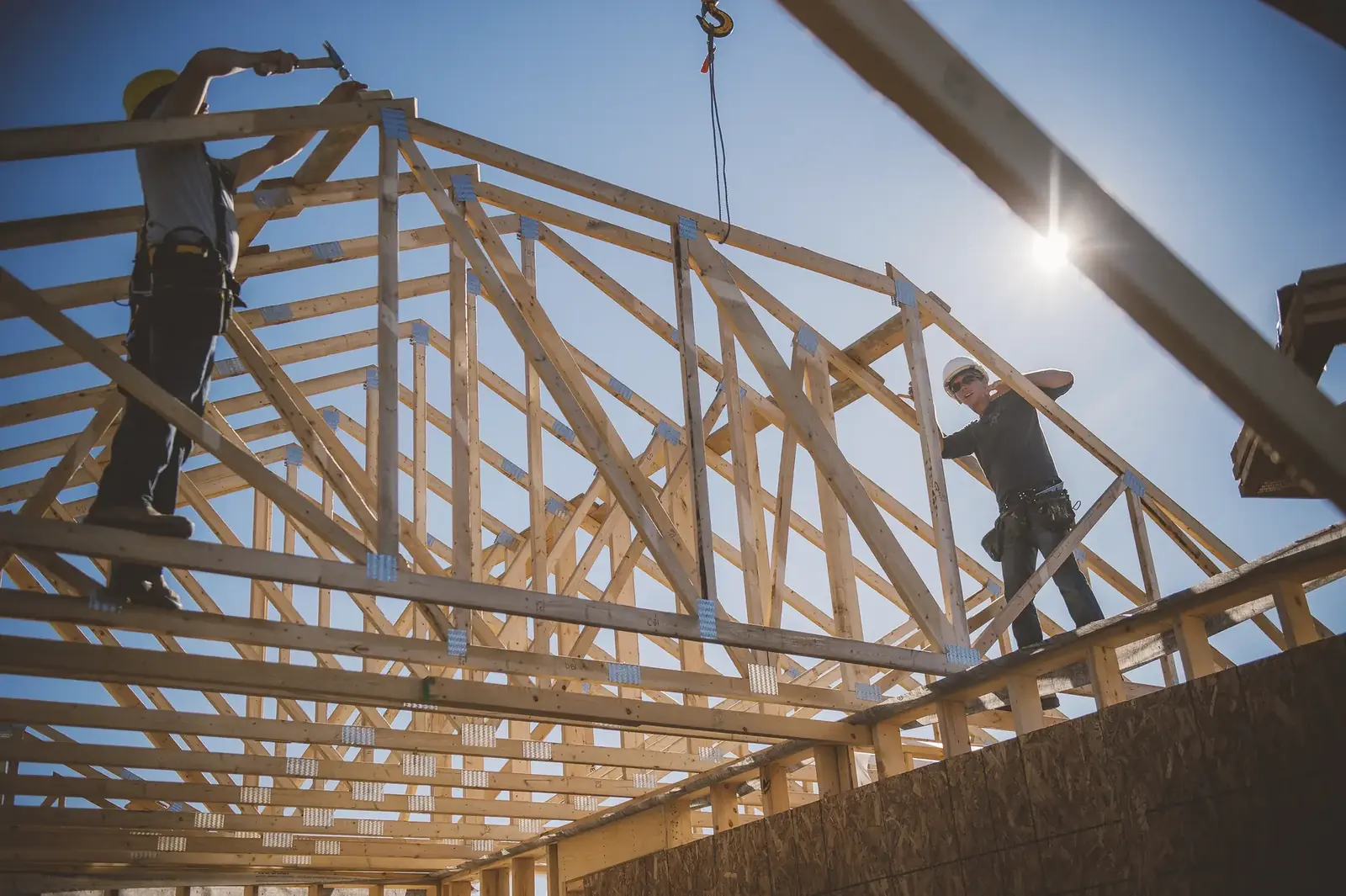
- Trusses and rafters get deeper or closer together as loads go up.
- Headers and beams over openings get larger, especially for wide garage doors and walls of glass.
- Roof shape matters. Simple, steep roofs shed snow and avoid drifts; valleys, dormers, and stepped roofs collect it.
- Ice barriers. Coeur d’Alene and Post Falls list severe weathering, and Coeur d’Alene’s criteria require ice barrier underlayment, which protects the roof edge from ice dams.
- Sliding snow off metal roofs can damage gutters, decks, and lower roofs, so entries and walkways should sit where snow won’t land on them.
Frost depth and foundations
Water in the soil expands when it freezes, and footings above the frost line can heave. That’s why footings must sit at least 24 inches below finished grade across Spokane, Liberty Lake, Coeur d’Alene, Post Falls, Hayden, and the unincorporated parts of both counties.
Spokane’s joint city and county frost depth policy allows a few exceptions. Detached residential accessory structures may use 18-inch footings, and frost-protected shallow foundations can be used when designed to code. A soils investigation can also support a different depth, but never less than 24 inches for most buildings.
Building through the winter
Coeur d’Alene averages about 70 inches of snow a year, and Spokane runs its snow operations from November 15 to March 15. Concrete can be placed in cold weather with heated enclosures, insulated blankets, and adjusted mixes, and Coeur d’Alene’s Building Services department publishes a cold-weather concrete procedure. Winter work costs more and moves slower, so the best schedules get foundations poured and buildings closed in before the coldest stretch.
What this means for your project
Get the design criteria right before drawings go to plan review. The wrong snow load sends drawings back, and the wrong roof shape can cost you every winter after. If you’re building in Spokane or Kootenai County, start a project and we’ll confirm the requirements for your exact lot.
Frequently asked questions
What's the difference between ground snow load and roof snow load?
Ground snow load is the weight of snow expected on the ground at a site. Roof snow load is what the roof is designed to carry after adjusting for roof slope, exposure to wind, heat loss through the roof, and the building's importance. Codes and local criteria usually list both.
How deep do footings need to be in Spokane and Coeur d'Alene?
At least 24 inches below finished grade. Spokane's joint city and county policy allows limited exceptions, such as 18 inches for some detached residential accessory structures and frost-protected shallow foundations designed to code.
Should I shovel snow off my roof?
Coeur d'Alene notes that structures built there with permits are designed for at least a 40 psf roof snow load, that older roofs may not meet it, and that the city doesn't make recommendations on when to remove snow. Removing roof snow carries real risk of falls and sliding snow, so hire a professional or talk to an engineer if you're worried about an older roof.
Do metal roofs help with snow?
Metal roofs shed snow well, which can reduce buildup, but sliding snow can damage gutters and lower roofs or injure people below. Snow guards and careful placement of entries and walkways matter as much as the roofing material.
Sources
- City of Spokane and Spokane County: Official frost depth policy
- City of Liberty Lake: Construction design criteria
- City of Coeur d'Alene: Adopted codes and design criteria
- City of Coeur d'Alene: Should I shovel the snow off my roof? (PDF)
- City of Post Falls: Current codes and design criteria
- City of Hayden: Building department design criteria
- Kootenai County: Residential building guide
- University of Idaho: Ground and roof snow loads for Idaho
- City of Coeur d'Alene: Snow guide
This guide is general information, not legal or engineering advice. Rules change, so confirm current requirements with the city, county, or state before you design or sign a contract. Last reviewed November 25, 2026.