The short answerNational survey data puts the average construction cost of a new single-family home at about $428,000 for roughly 2,650 square feet, or around $160 per square foot, before land. Custom homes in the Spokane and Coeur d'Alene area usually cost more than that average because of design, finishes, and site work. Published local estimates for custom builds run from roughly $180 to $350 per square foot before land, and the only reliable number for your home comes from priced plans for your specific lot.
Everyone wants a number per square foot, and it’s a fair question. The trouble is that the number means different things depending on who’s quoting it. This guide lays out the published benchmarks, explains what they leave out, and walks through the local factors that move a custom home budget in Spokane, Coeur d’Alene, and the towns between them.
Start with the national benchmarks
The most widely cited source is the National Association of Home Builders’ construction cost survey. In its 2024 survey, the average construction cost of a new single-family home was $428,215, which made up 64.4 percent of the average sales price of $665,298. The average home in that survey had 2,647 square feet of finished space. Divide those and you get roughly $160 per square foot for construction alone.
NAHB also analyzes Census data on homes built by contractors on the owner’s land, which is what most people mean by a custom home. For homes started in 2024, the national median was $166 per square foot of floor area, excluding the lot.
Those are averages across the whole country and across every finish level, so treat them as a floor rather than a target for a custom home here.
What local estimates say
Published estimates for the Spokane area land well above the national median. One national renovation company’s Spokane guide puts custom construction at roughly $180 to $350 per square foot depending on design, finishes, and site conditions. In a 2025 Spokesman-Review story, a north central Washington custom builder said his homes, most over 2,500 square feet, average about $350 per square foot.
Coeur d’Alene and Hayden tend to track similar ranges, with lake-area and view lots often pushing higher because of site work, access, and finish expectations.
The honest answer is that a simple, well-planned custom home and a complex one with lots of glass and rooflines can differ by more than $150 per square foot on the same street.
What “cost per square foot” usually leaves out
Before you compare any two numbers, check what’s inside them. These are the items most often left out:
- Land. Nearly every per-square-foot figure excludes the lot.
- Site work. Clearing, excavation, grading, driveways, and retaining walls. In NAHB’s survey, site work averaged 7.6 percent of construction cost, but rural and sloped lots can run far higher.
- Utilities. Sewer and water connections in town, or a well and septic system on rural lots.
- Permits and fees. Building permits, plan review, and impact or connection fees vary by city and county.
- Design. Architect, engineering, and survey fees.
- Garages, decks, and porches. Some quotes count these in the square footage and some don’t, which changes the per-foot number a lot.
Local factors that move the number
Snow loads
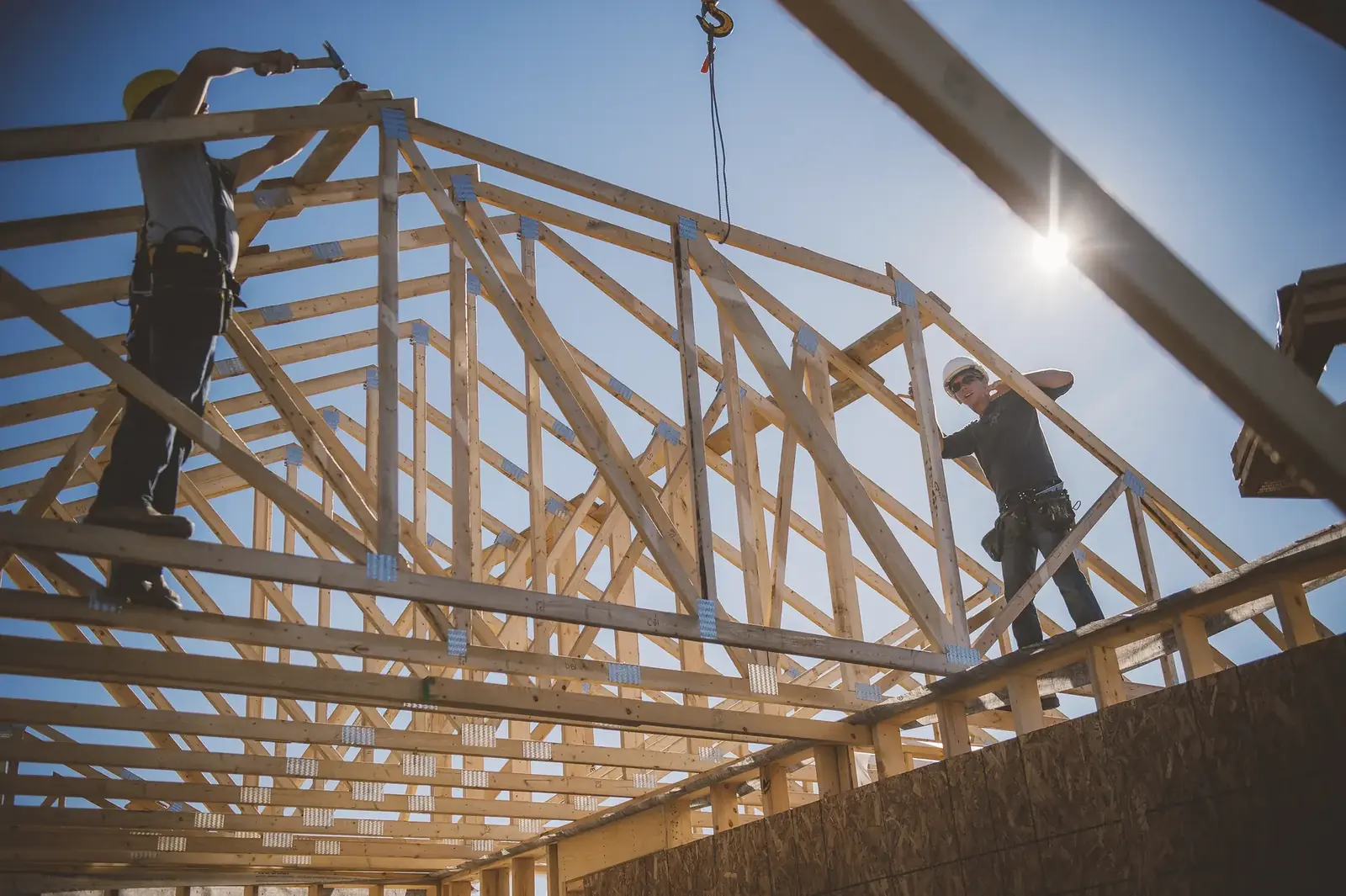
Roofs here carry real weight. Coeur d’Alene designs for a 60 psf ground snow load, Post Falls for 56 psf, and the north end of Hayden for 70 psf. Higher loads mean heavier trusses, bigger headers, and sometimes a different roof shape. Steep, simple roofs that shed snow are cheaper to build for these loads than complex ones with valleys where snow drifts. Our snow load and frost depth guide lists the requirements by city.
Foundations and frost
Footings must sit at least 24 inches below grade across Spokane and Kootenai counties. Basements are common here, and a daylight basement on a sloped lot can add living space at a lower cost per square foot than building up, but it also adds excavation and waterproofing.
The lot itself
Rock, steep slopes, long driveways, and distance to power all show up in the budget. On rural lots, a well and septic system can be a five-figure line item on their own. A lot review before you buy is one of the cheapest ways to protect your budget.
Design and finishes
Complexity costs money. Corners, rooflines, large spans of glass, and custom millwork add labor and material. Finishes are the other big lever: cabinets, counters, flooring, fixtures, and windows can swing a budget more than almost anything structural.
Size
Per-square-foot cost tends to drop as homes get bigger, because expensive rooms like kitchens and baths are spread across more space. A smaller home can still cost more per square foot even when its total price is lower.
Fixed price or cost plus
Builders usually price custom homes one of two ways.
Fixed price. You agree on a total for a defined scope. It works best when drawings and selections are complete, because changes after signing become change orders.
Cost plus. You pay the actual cost of labor and materials plus a fee. It works well when you want flexibility to make decisions as you go, and a good builder shows you every invoice. Ask how the fee is calculated and whether there’s a guaranteed maximum.
Either way, look for clear allowances for finishes, a written change order process, and a payment schedule tied to completed work.
How to build a realistic budget
- Decide your all-in number first, including land, site work, design, permits, and a contingency.
- Get the lot reviewed for access, slope, utilities, and soils before you finalize the design.
- Price the design while it’s still flexible. Bringing a builder in during design is the easiest way to keep drawings and budget in line.
- Set realistic allowances for the finishes you actually want, not placeholders.
- Hold a contingency for the unknowns, especially below grade.
If you’d like a second set of eyes on a lot or a design, start a project and we’ll walk through it with you.
Frequently asked questions
Does cost per square foot include the land?
No. Published cost-per-square-foot figures almost always exclude the lot. Many also exclude site work, utility connections, permits, and design fees, so read the fine print before comparing numbers.
Why do online cost calculators give such different answers?
They define cost differently. Some count only the house, some include site work and fees, and most assume average finishes on a simple lot. They're useful for a first gut check, not for a budget.
How much contingency should I hold for a custom home?
Many owners hold somewhere around 5 to 10 percent of the construction cost for changes and unknowns, and more on sloped or rural lots where site conditions are harder to predict.
Is it cheaper to build or buy in Spokane?
It depends on the lot, the size, and the finish level. Building usually costs more per square foot than buying an existing home, but you get exactly the layout, efficiency, and finishes you want, with nothing to renovate later.
Sources
- NAHB: Cost of Constructing a Home, 2024 (PDF)
- NAHB Eye on Housing: Square foot prices moderate in 2024
- Block Renovation: Building a custom home in Spokane, WA
- The Spokesman-Review: NCW builder adapts to rising costs (2025)
- City of Coeur d'Alene: Adopted codes and design criteria
- City of Spokane and Spokane County: Official frost depth policy
This guide is general information, not legal or engineering advice. Rules change, so confirm current requirements with the city, county, or state before you design or sign a contract. Last reviewed November 25, 2026.